
The patient presented to us with the above-mentioned injuries following a motorcycle accident.
The 31-year-old patient, who comes from a European country, was unable to return home due to personal circumstances and declined surgical treatment. During the initial session, he received detailed counseling about the risks and possible side effects. His greatest wish was to return to active Muay Thai training—a challenge we embraced with great motivation and enthusiasm.
Given his high level of motivation, we initiated an intensive conservative rehabilitation program. Significant progress became apparent after a short period of time.
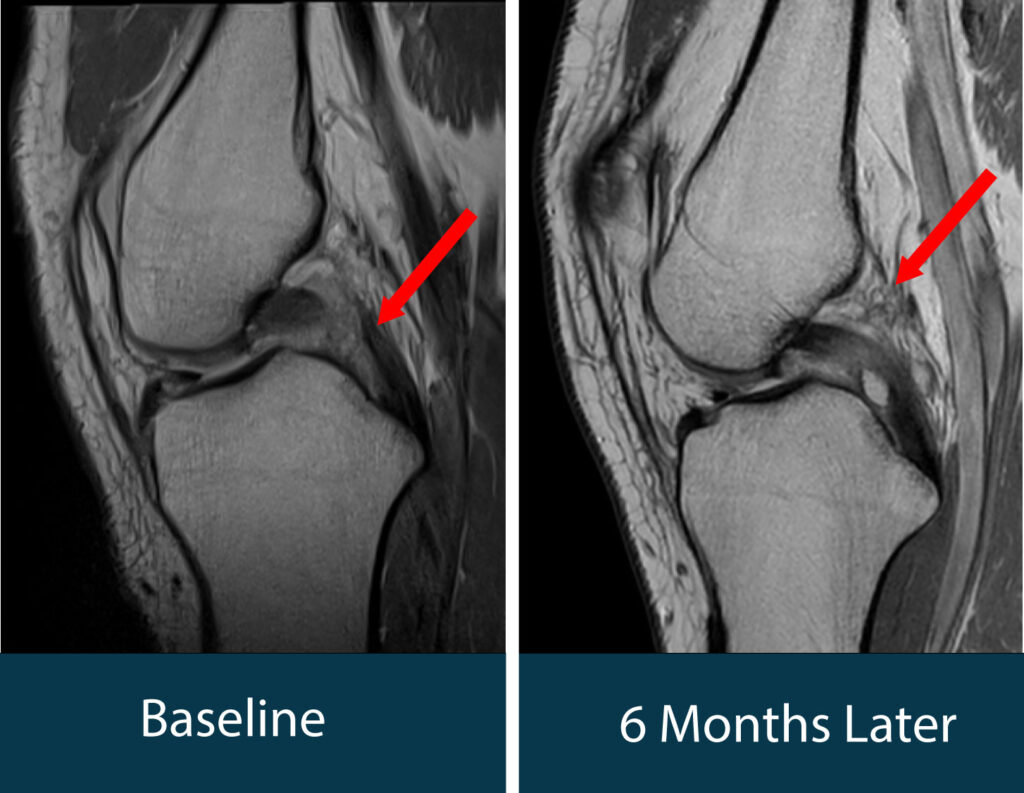
The rehabilitation lasted approximately six months. During this period, regular orthopedic evaluations and MRI scans were performed to monitor the healing process of the injured structures, including PCL stress tests. The course of treatment involved the typical ups and downs expected in an intensive rehabilitation program. Six months later, we were able to present an excellent outcome: MRI images confirmed complete healing of the posterior cruciate ligament.
Afterwards, the patient returned to Muay Thai training, with a focus on the rehabilitated leg.
Rehabilitation began with passive measures and was gradually supplemented with highly specific active rehabilitation methods.
Although injuries of this kind—comparable to the “unhappy triad”—are considered classic, the treatment was individually tailored to the patient, who demonstrated excellent compliance.
This case once again illustrates how effective conservative therapy can be, a finding that is increasingly supported by current studies.