
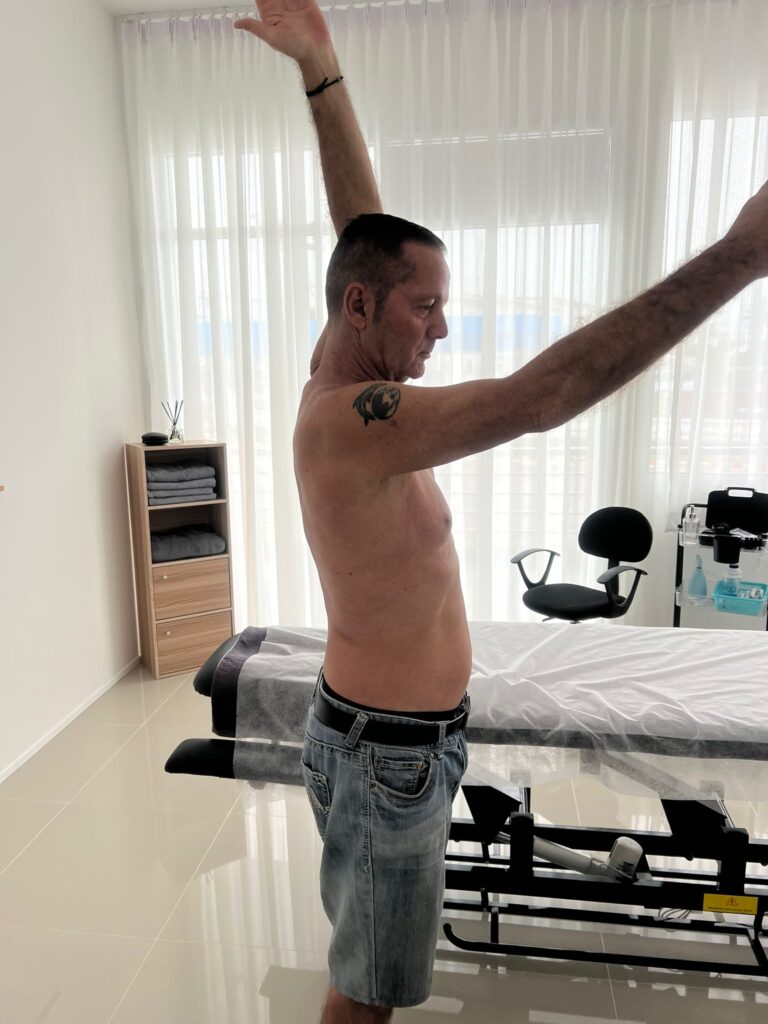
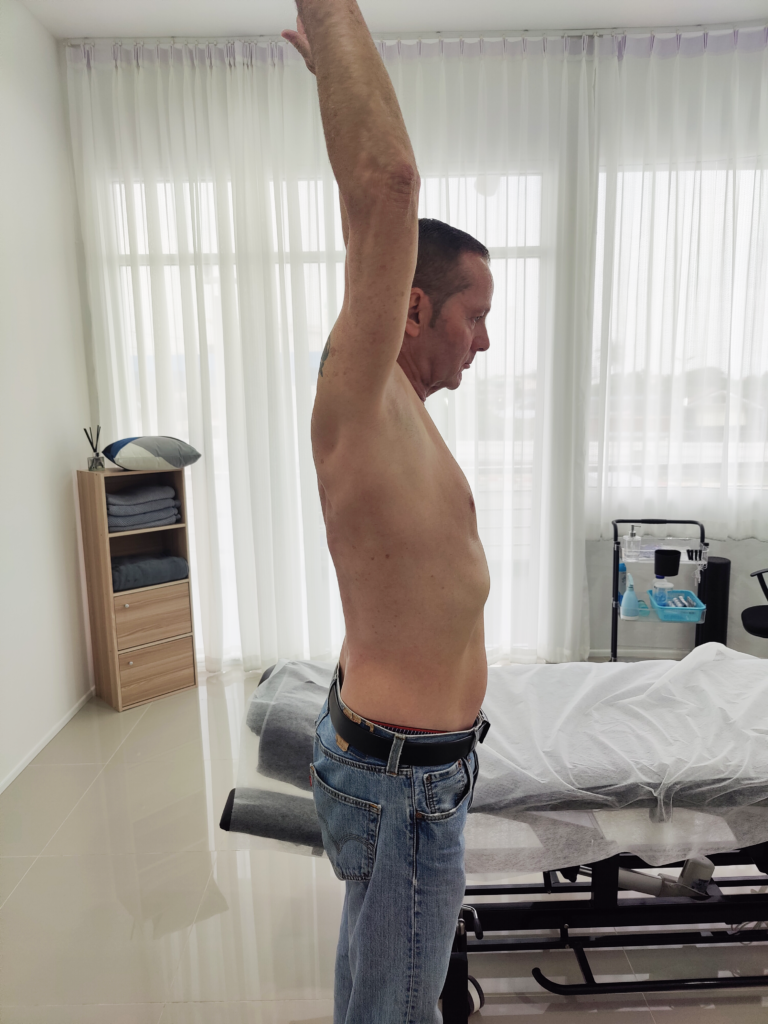
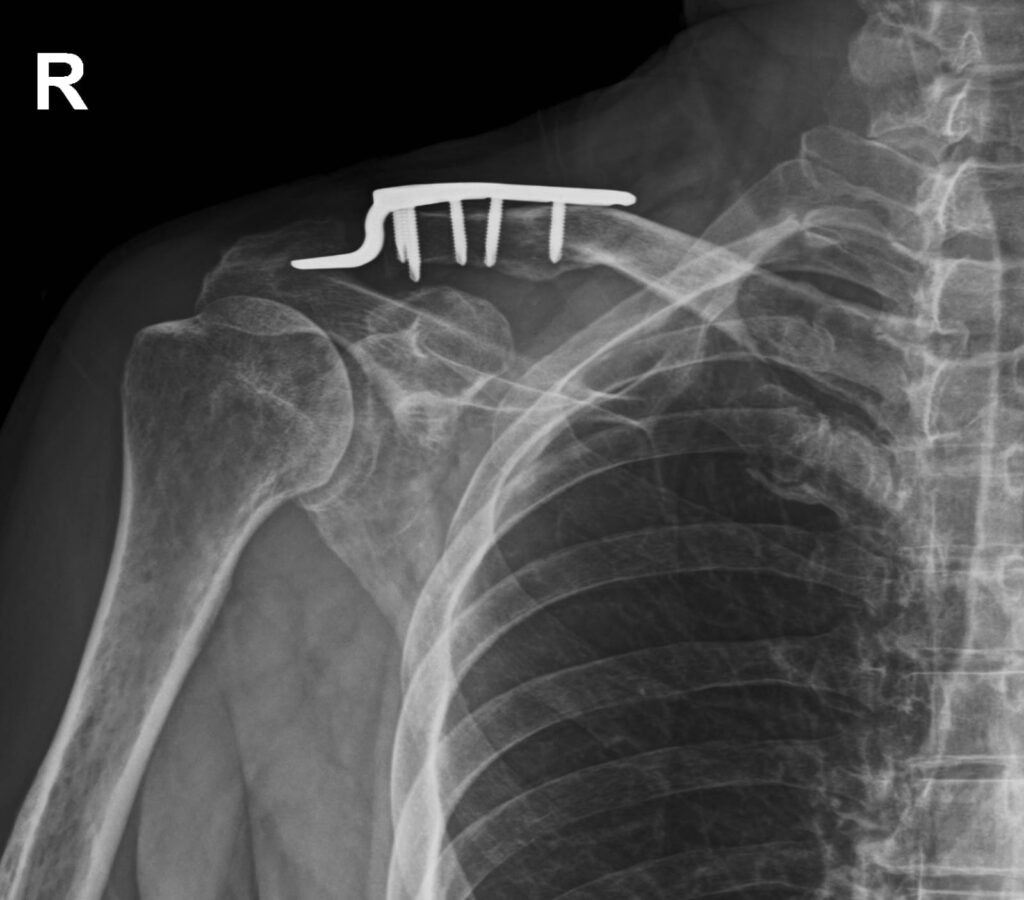
The patient presented to our clinic following surgical treatment for a classic Tossy III acromioclavicular joint injury, reporting persistent pain and significant limitations in shoulder mobility. Initial clinical assessment demonstrated marked restrictions in shoulder flexion, abduction, as well as internal and external rotation. Based on the severity of the functional impairment, a demanding rehabilitation process was anticipated.
An intensive rehabilitation program was initiated from the first treatment session. Measurable improvements in pain levels and range of motion were observed within the first two weeks. Rehabilitation then progressed using an individualized, symptom-guided approach tailored to the patient’s functional deficits and recovery capacity. Early treatment phases focused on passive mobilization techniques, which were gradually transitioned into active therapeutic exercises and reinforced through a structured home exercise program.
Over a rehabilitation period of approximately four months, shoulder function was restored to approximately 90% of the pre-injury level. At the final stage of rehabilitation, surgical hardware removal was performed to facilitate full functional recovery of the shoulder joint. The patient subsequently followed a highly specific, progressive active rehabilitation protocol aimed at optimizing neuromuscular control and enabling a safe return to sport.
This case highlights the effectiveness of a structured and progressive rehabilitation strategy in achieving excellent functional outcomes despite postoperative stiffness and prolonged immobilization.